
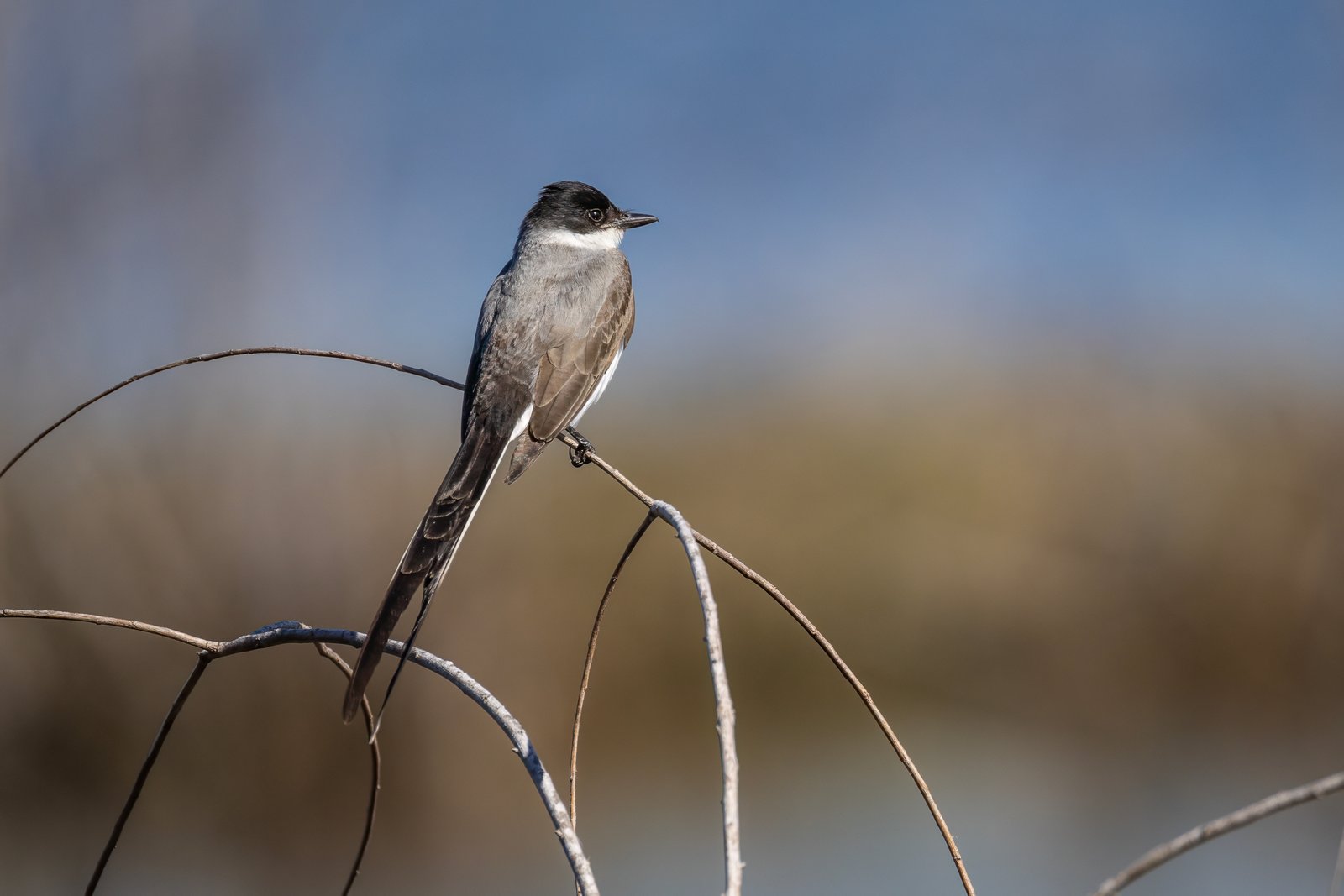
Bird watching is often about patience and timing, and sometimes it rewards you with unforgettable moments. During a recent visit to Bahia Beach Nature Preserve in Ruskin, Florida, we experienced such a moment when we encountered a fork-tailed flycatcher. This rare bird dazzled with its graceful flight and striking appearance, making it a highlight of the winter season.
The fork-tailed flycatcher is a slender bird known for its strikingly long, deeply forked tail that gives the species its name. Its plumage contrasts beautifully, with a jet-black cap, gray back, and pristine white underparts. Measuring 14 to 15 inches in length, the tail alone accounts for much of its size, making the bird’s silhouette unmistakable in the field.
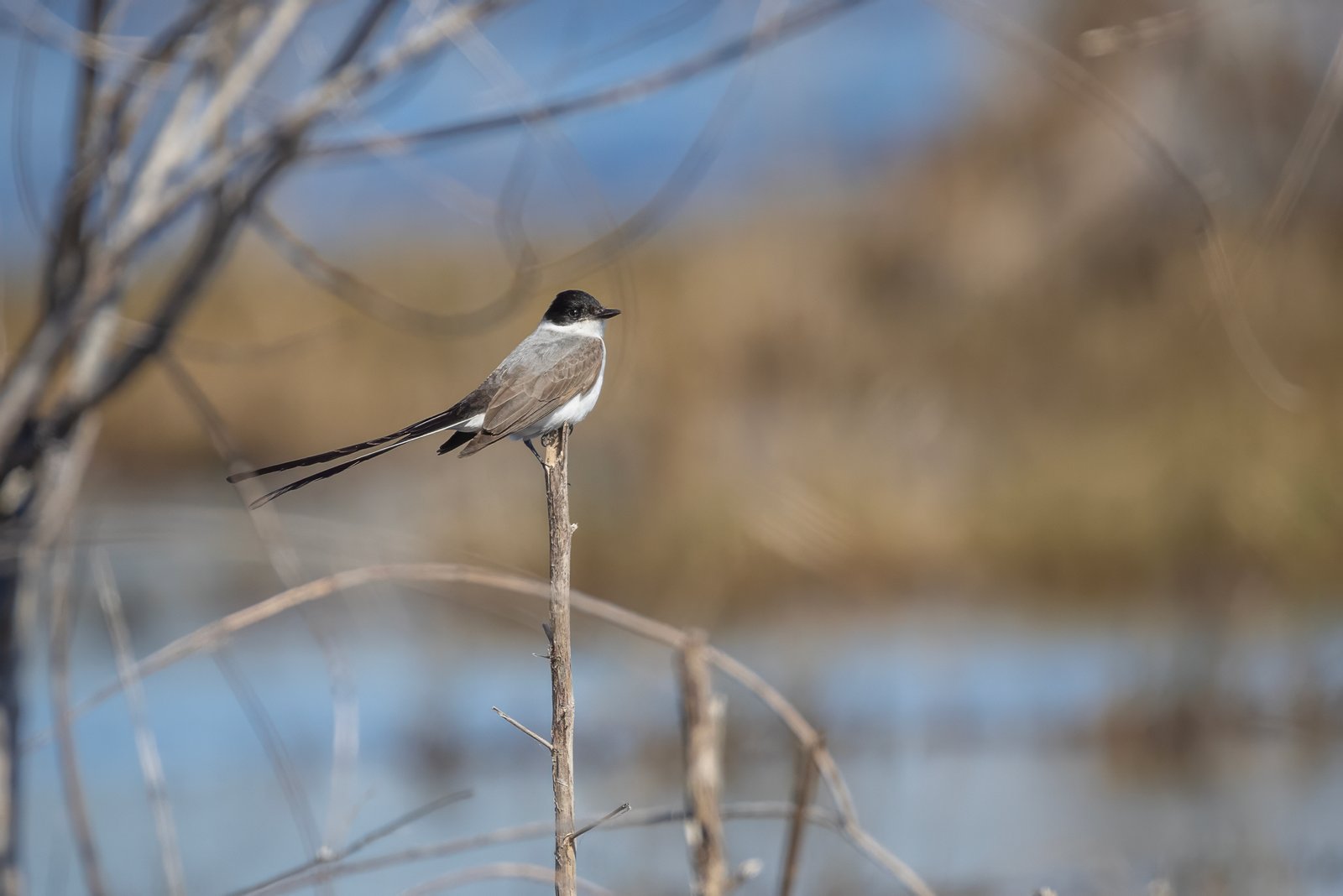
Native to Central and South America, the fork-tailed flycatcher thrives in open habitats such as savannas, grasslands, and marshy areas, often near water. While it primarily resides in its southern range, some populations migrate seasonally, and a few individuals occasionally venture as far north as the southern United States. Such sightings are rare, making our encounter in Ruskin even more special.
We arrived in the early afternoon on a cool and sunny day. As we strolled through the preserve’s pathways, we quickly noticed a group of photographers and birders and knew that was where the flycatcher would be. Perched elegantly on a branch above the water, scanning the skies for prey, was the unmistakable fork-tailed flycatcher. Its elongated tail feathers fluttered lightly in the breeze, and its watchful gaze seemed almost regal.
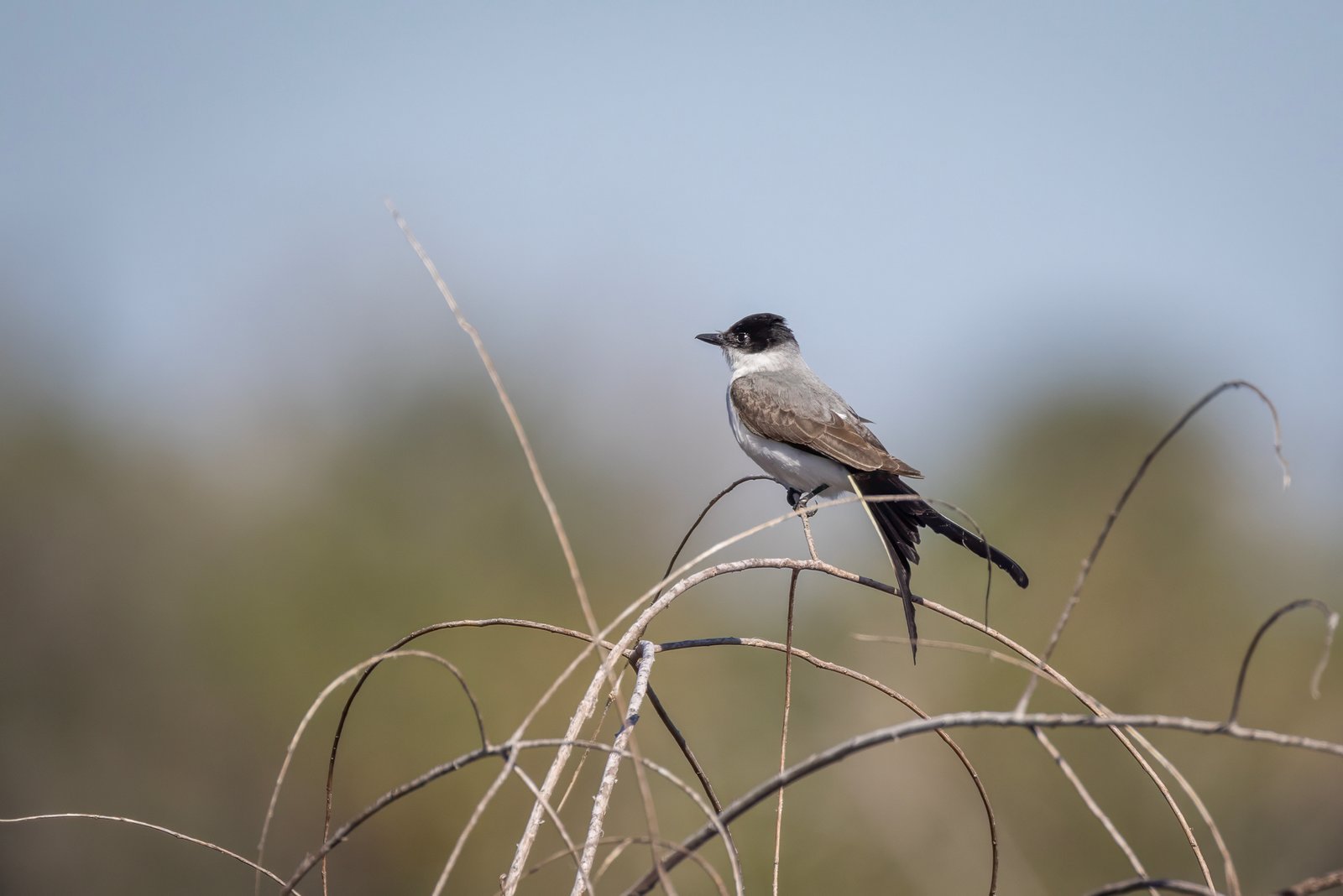
Photographing this bird was no easy feat. Its constant movement and the interplay of light through the bushes tested my skills and patience. I decided to go back to the car and switch to my Canon R6 camera which has a feature called Raw Burst Mode which captures images for a brief half second before actually snapping the shot. This feature is enormously helpful to capture the flight of a bird like the flycatcher that takes flies off frequently. Changing cameras was well worth it.
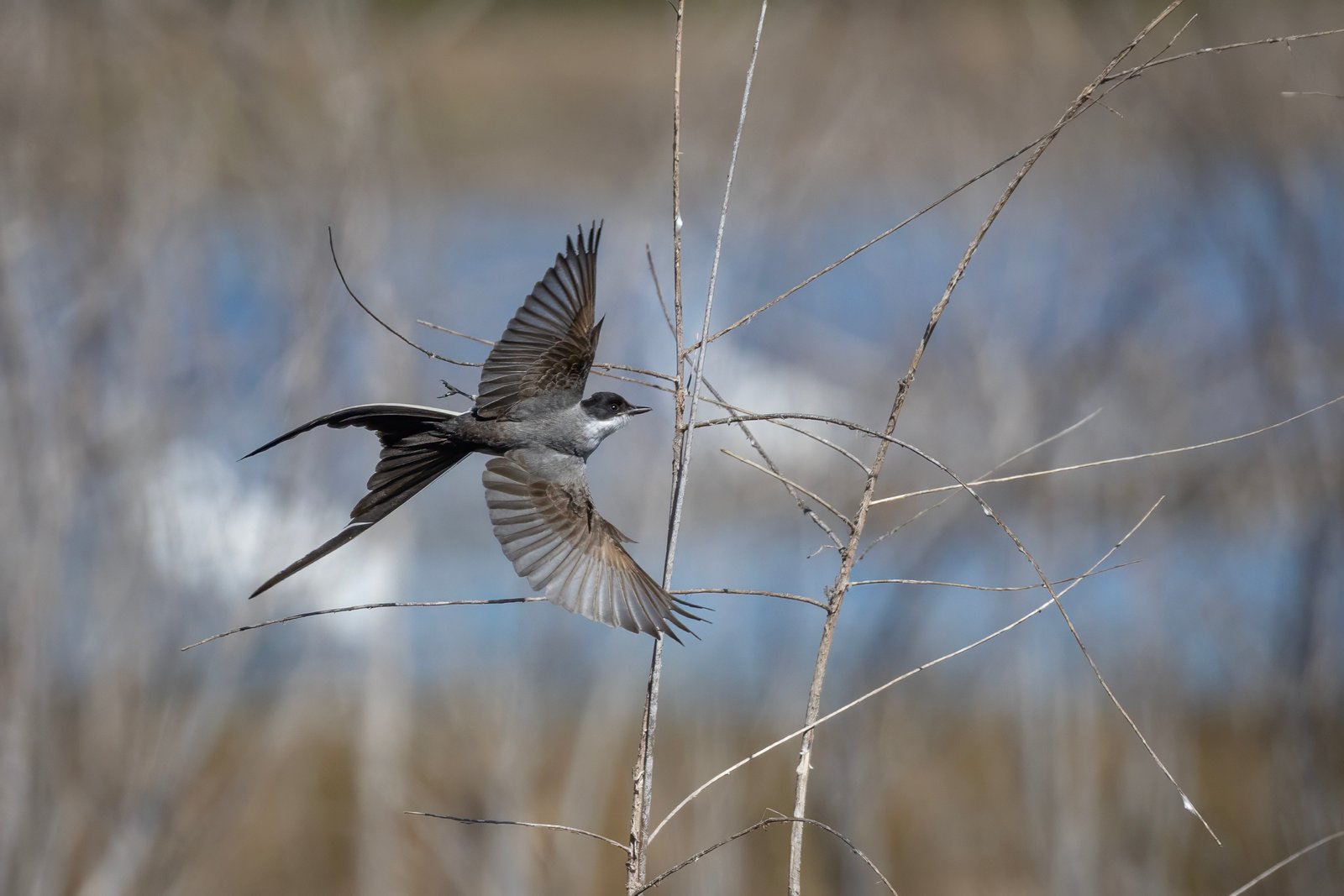
In North America, the fork-tailed flycatcher is considered a rare visitor. Factors such as weather patterns, food availability, or navigational errors may push these birds far beyond their usual range. Such unexpected journeys make sightings like mine at Bahia Beach Nature Preserve even more remarkable. This bird stayed for less than two weeks before moving on. It serves as a reminder of the dynamic and often unpredictable nature of bird migration.
The fork-tailed flycatcher’s appearance in Ruskin is a testament to the richness of Florida’s ecosystems and the surprises they hold for those willing to look. Whether you’re a seasoned birder or just beginning your journey into the world of avian wonders, places like Bahia Beach Nature Preserve offer the chance to witness moments that stay with you forever.
More photos have been uploaded to the Flycatchers gallery.
Leave a Reply