
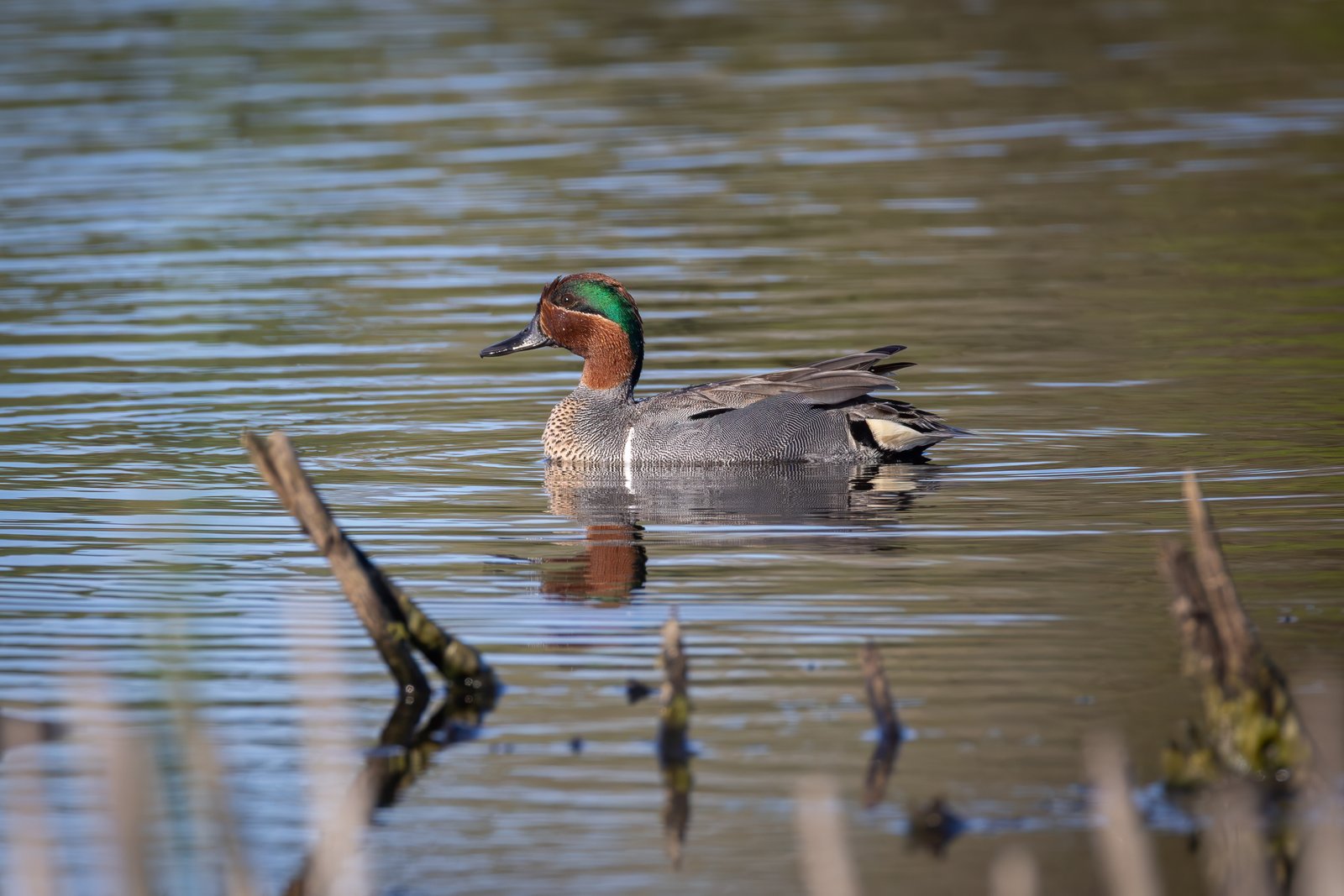
The transition to our summer season for birds is beginning. It’s mid-March and almost all the robins have departed on their journey north. Likewise, the little hooded mergansers that usually populate the many small ponds in the area have left for their northern nesting grounds. As the weeks go by, more ducks will head out while our summer residents begin returning. I’ve already seen several swallowtail kites that spend their winters in South America.
Every season changes from year to year. While we can usually depend on the regular migrants, it seems that each year brings some surprises. Weather patterns undoubtedly have a big impact on the overall migration.
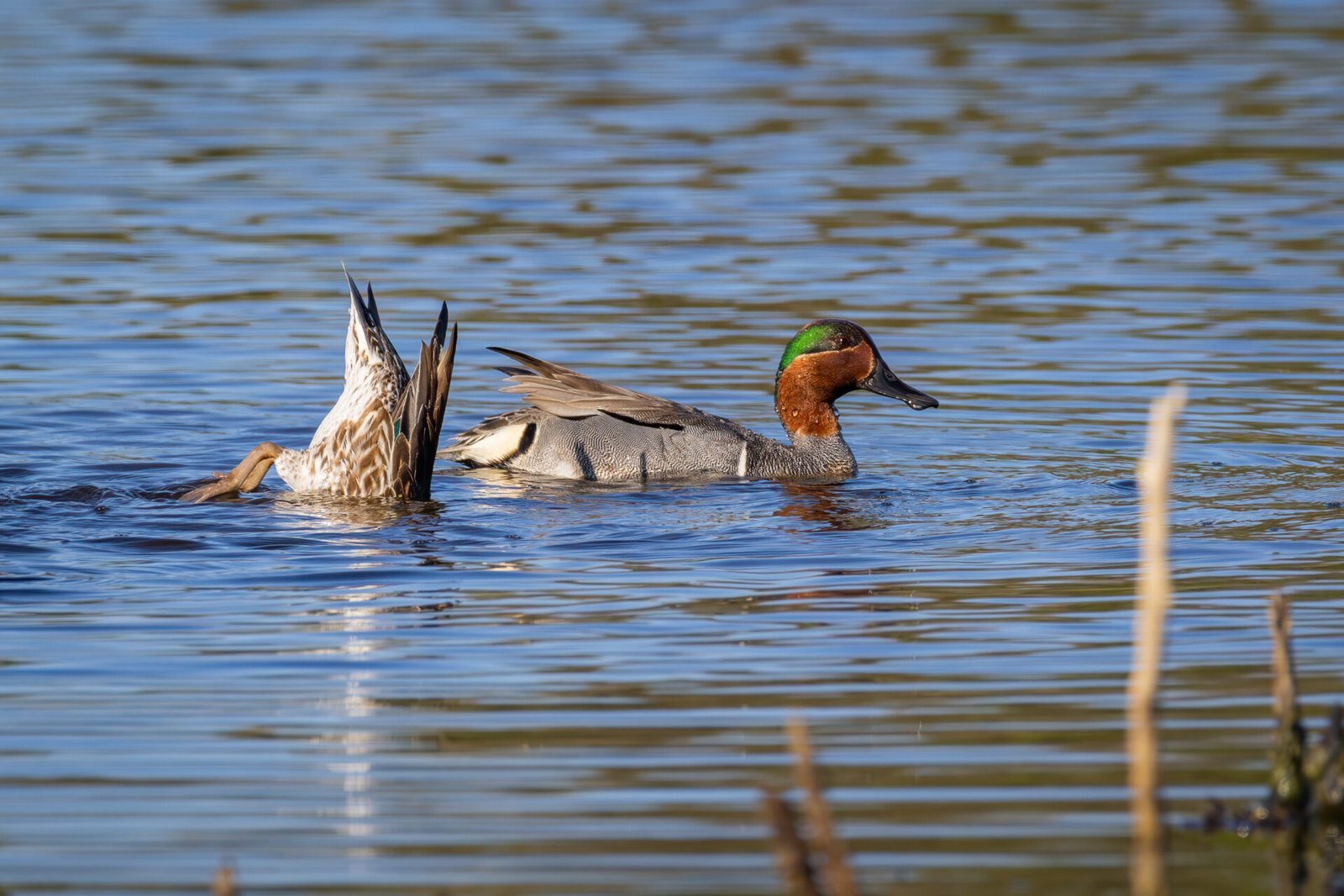
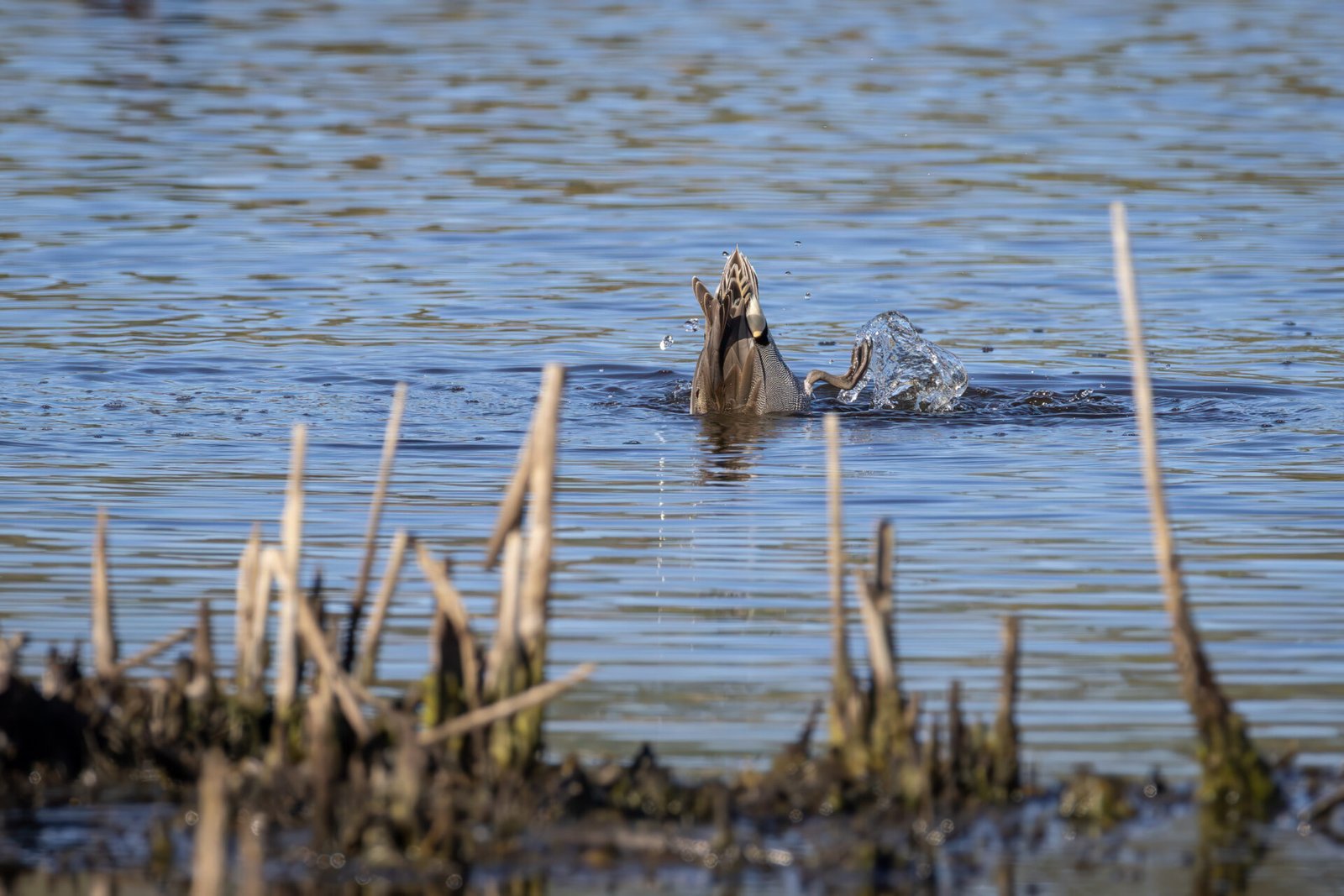
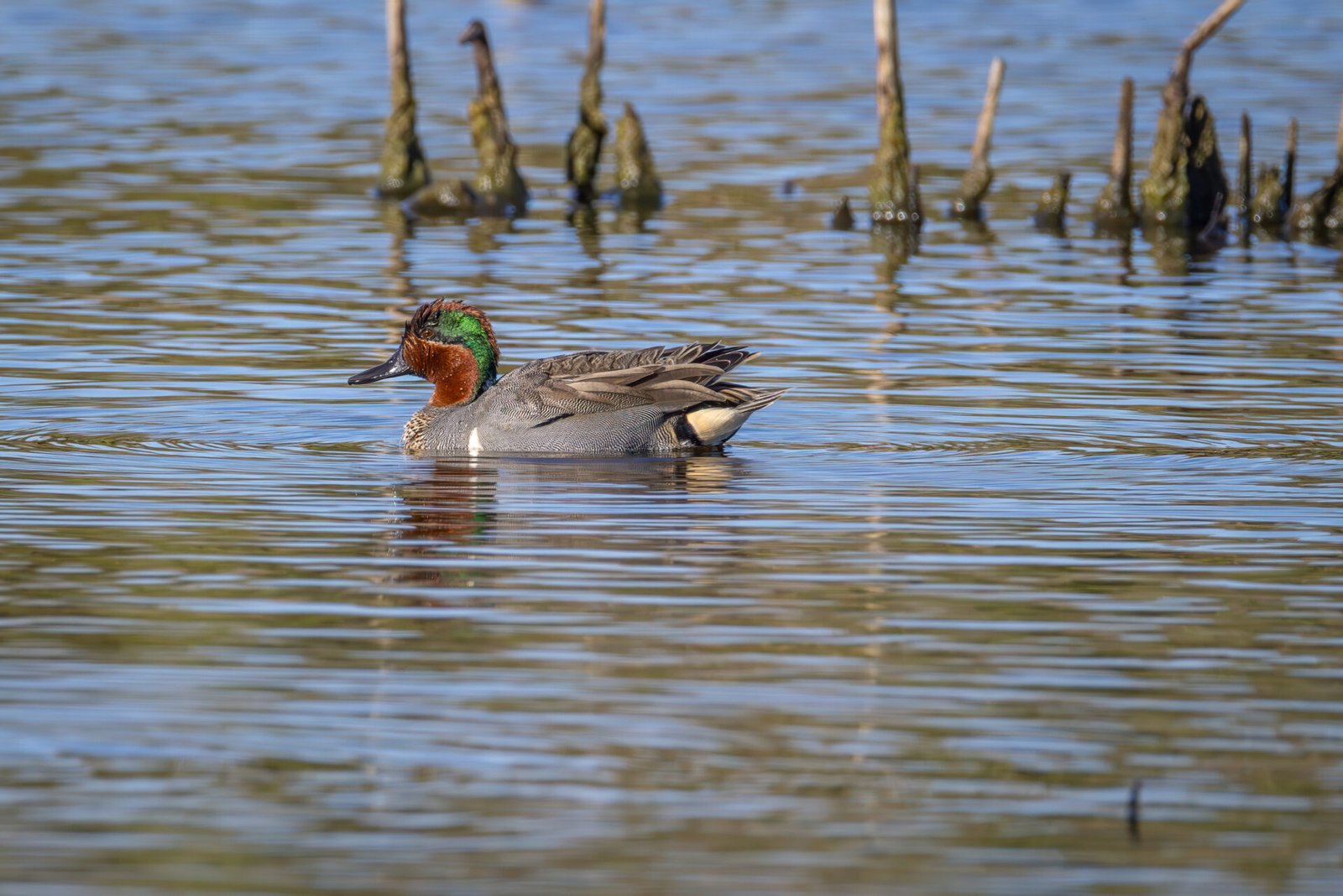
This year we were fortunate to find a large group of beautiful green-winged teal that found a lake to their liking. With water levels very low due to the ongoing drought, the food that the teal enjoy, became more accessible. On a recent visit, there were still several around but from reports over the past couple of days, it seems like they have also headed north. It was comical to watch them kick hard to reach the grass on the bottom of the lake.
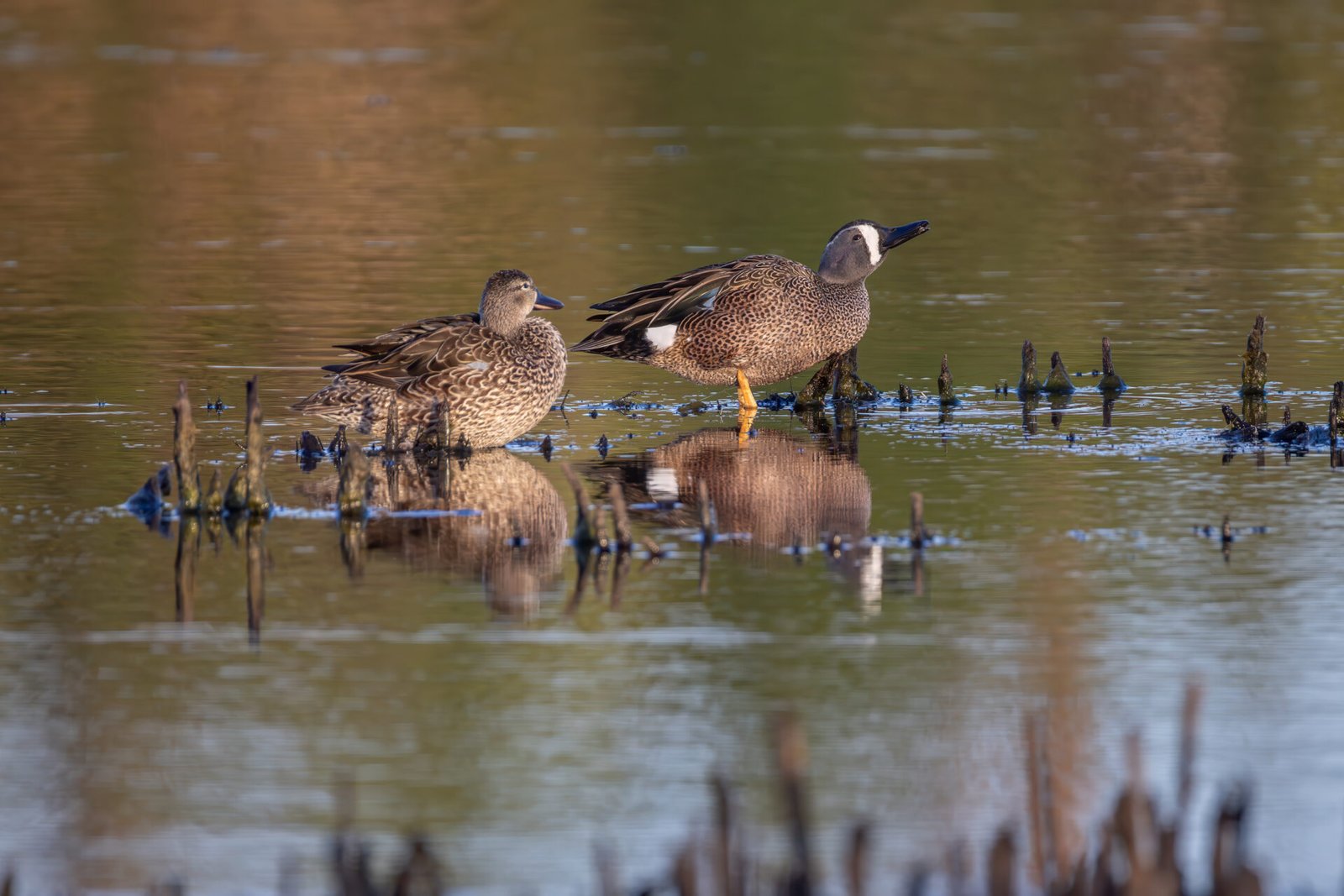
There were also a large number of blue-winged teal on the lake. They are often regular visitors to this location. Earlier in the year there were also several widgeons and gadwalls. The gadwalls were a surprise.
This lake has also become a favorite spot for reddish egrets. Many bird enthusiasts travel to Fort DeSoto Park in the St. Petersburg area to see them hunt in the tidal pools. Reddish egrets are relatively rare with only an estimated 6,000-10,000 breeding pairs in the US. They can be found along the Gulf coast. Even rarer is the all-white morph. They are often mistaken for great egrets but the beak and leg colors are the distinguishing features. Only about 10% of reddish egrets in Florida are white morph. Reddish egrets are a prized species for birdwatchers. They like to forage for small fish in shallow waters.
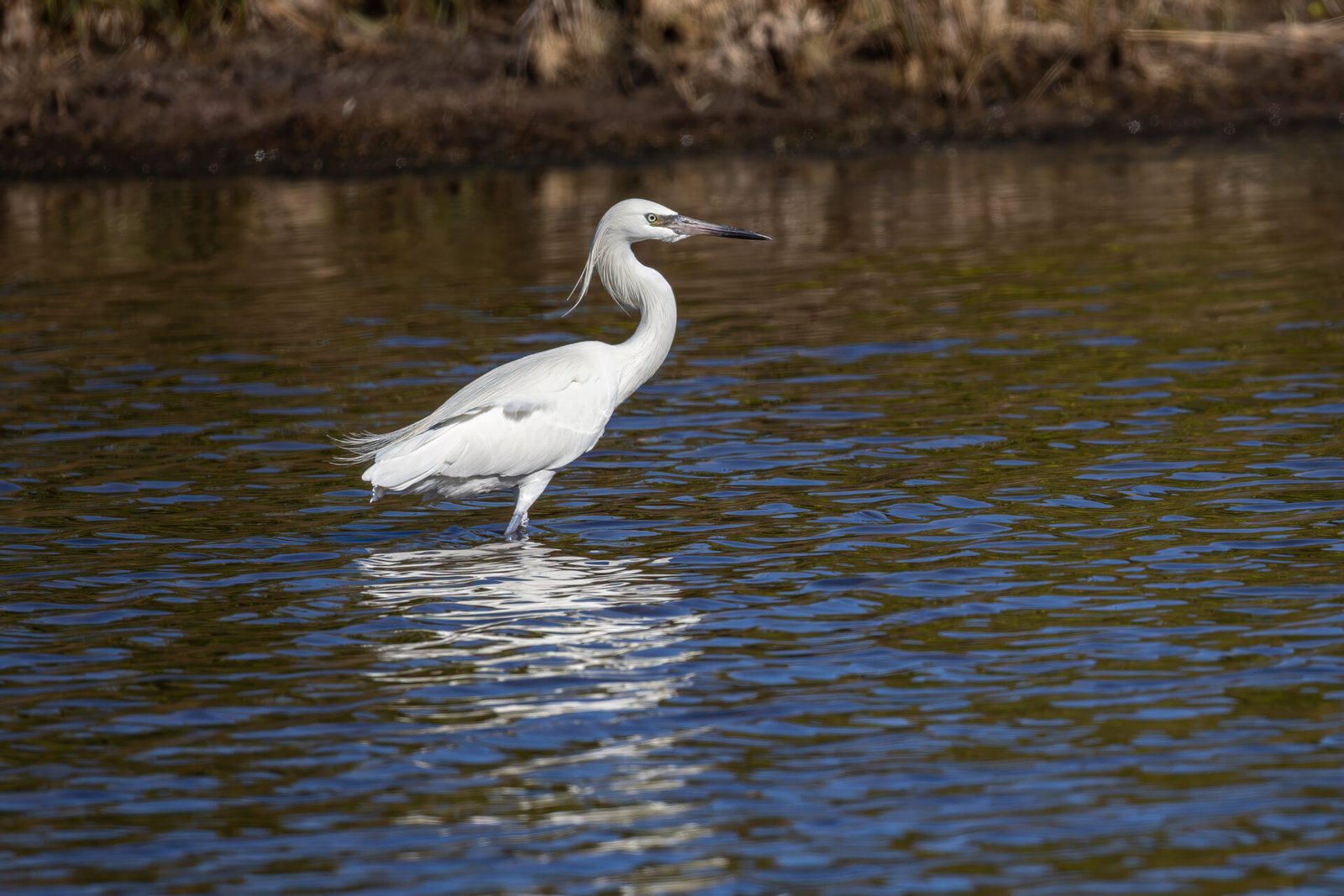
For comparison, this is a non-white reddish egret.

The burning question will be how the upcoming spring migration materializes. 3 years ago we had one of the most amazing week-long stretches ever. Everything came together. There was an abundance of fruit and several spring cold fronts stalled the birds flights north. But in 2024, we were hit by 3 hurricanes and many of the fruit-bearing trees were severely damaged. The spring migration last year was very sparse. Hopefully the trees have recovered enough to produce ample fruit and the cold fronts will come through at the right times to give us another good season. We’re already starting to see some species come through but the main push is a few weeks away.
I’ll be watching the bird reports and staying in touch with fellow photographers to monitor the status of the migration. Hopefully we’ll get some more good surprises (and good photos) this spring.
Leave a Reply