
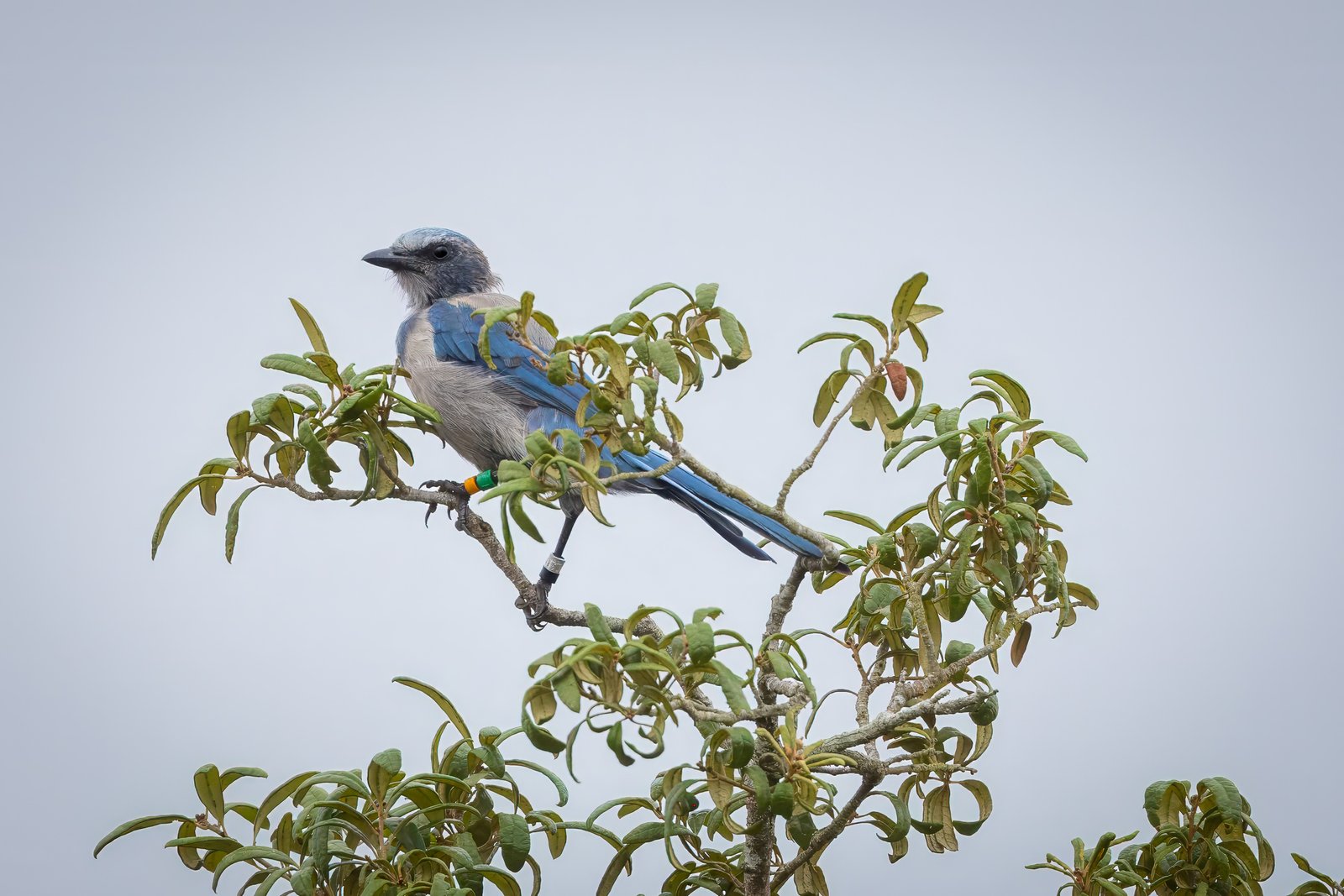
About 20 miles east of here is a small state park that is probably unknown to the majority of people who drive past it everyday. But to bird enthusiasts, it is destined to become a hotspot to visit. According to my friend Art Nadelman, the state of Florida recently released almost 60 Florida scrub jays. Scrub jays remain a threatened species. This appears to be a new project to expand the jays population while studying their behaviors. The park has installed feeders and placed trail cameras near the feeders to monitor their activity.
The Florida subspecies of scrub jays are found nowhere on the planet other than a small region of the south-central part of the state. In this region there are habitat areas dominated by scrub oaks which provide the acorns that these birds prefer. Unfortunately that habitat is shrinking which threatens the bird population. Finding scrub jays is a hit or miss opportunity. The park is only slightly larger than 600 acres but finding a few of just 50 birds can be a challenge. Fortunately, like other jays, they can be noisy and tend to travel in family groups. So, if you hear them, you can usually find them. We were joined by another couple of photographers who were hoping to get their first shots of a Florida scrub jay. On this morning the jays did not cooperate.
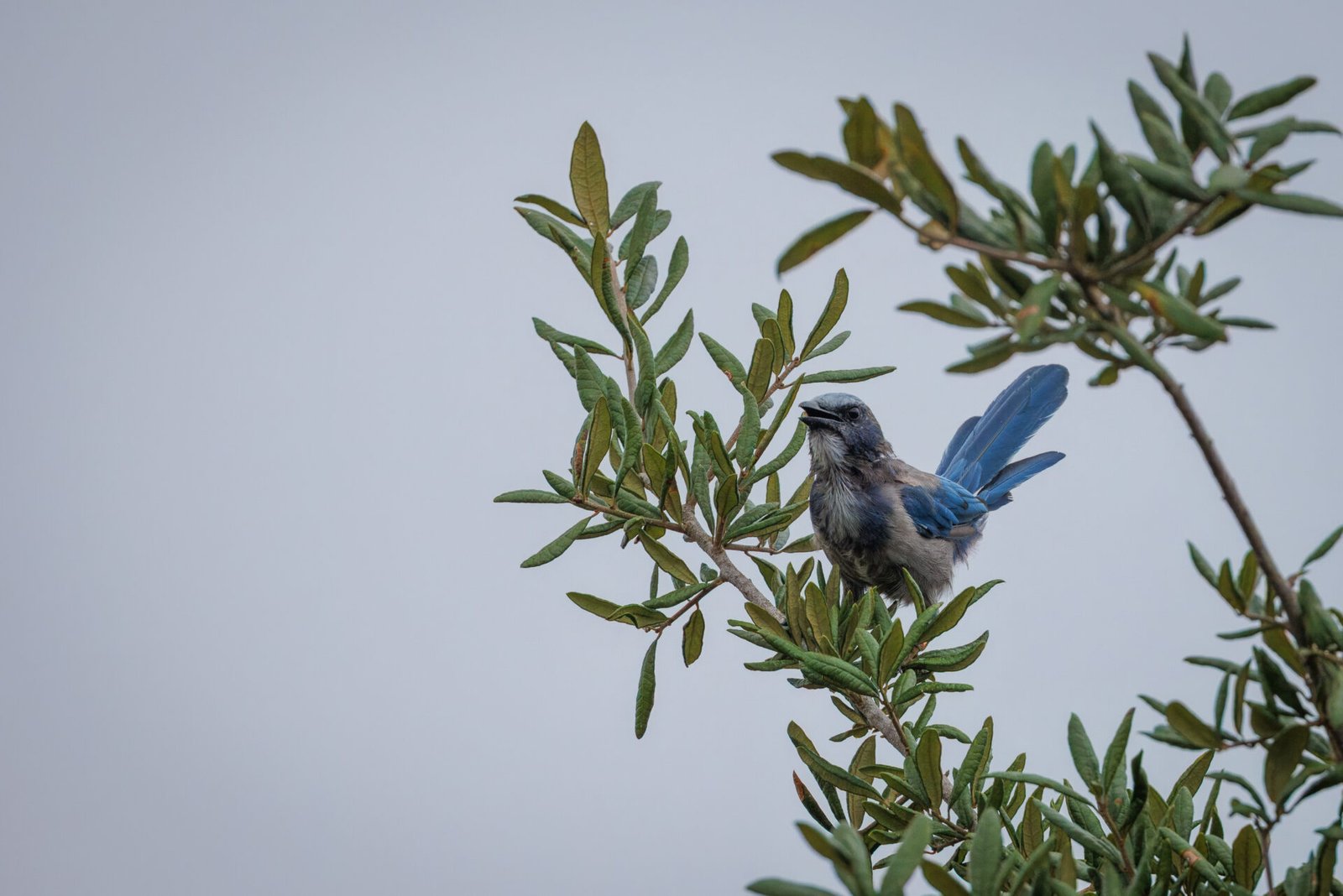
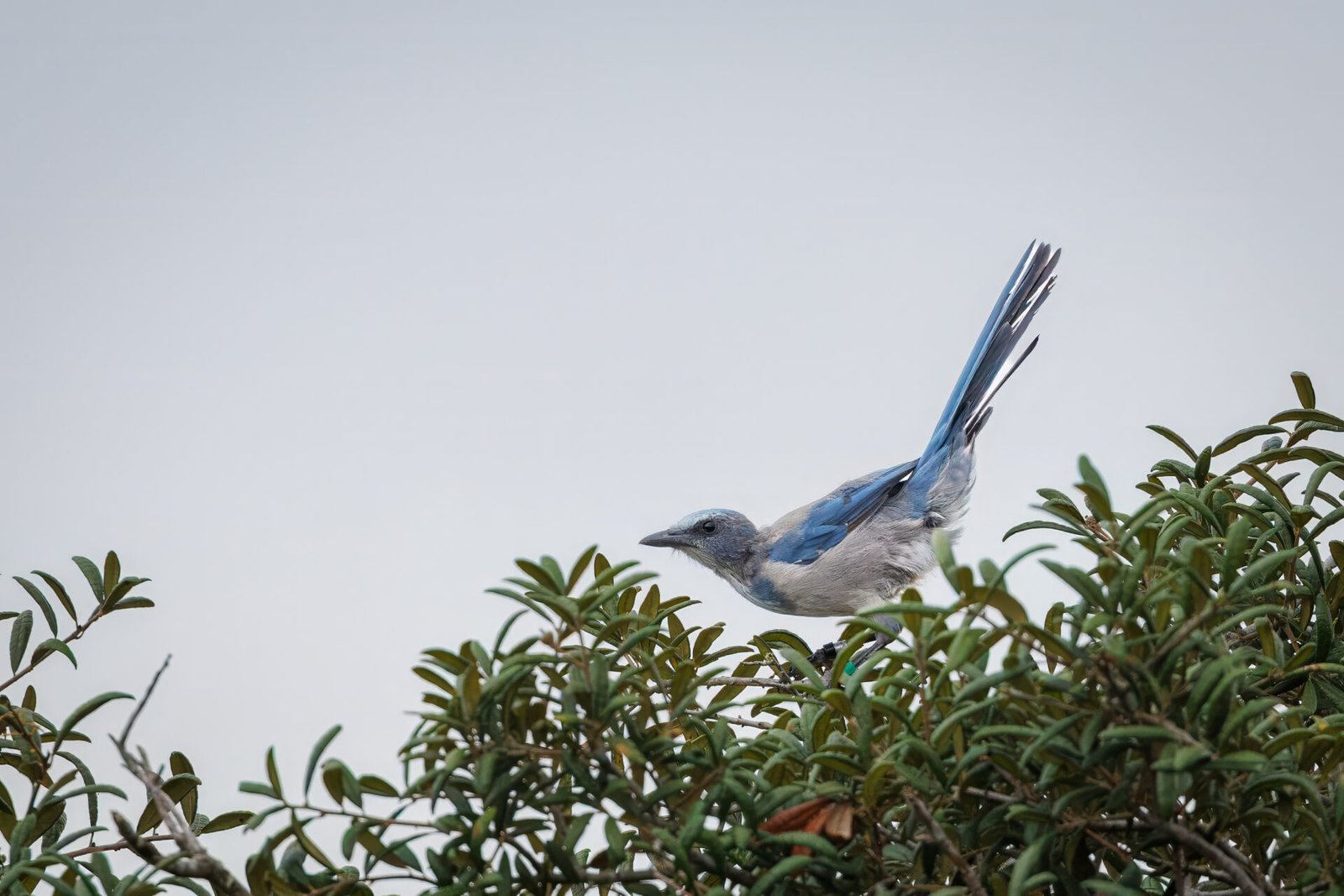
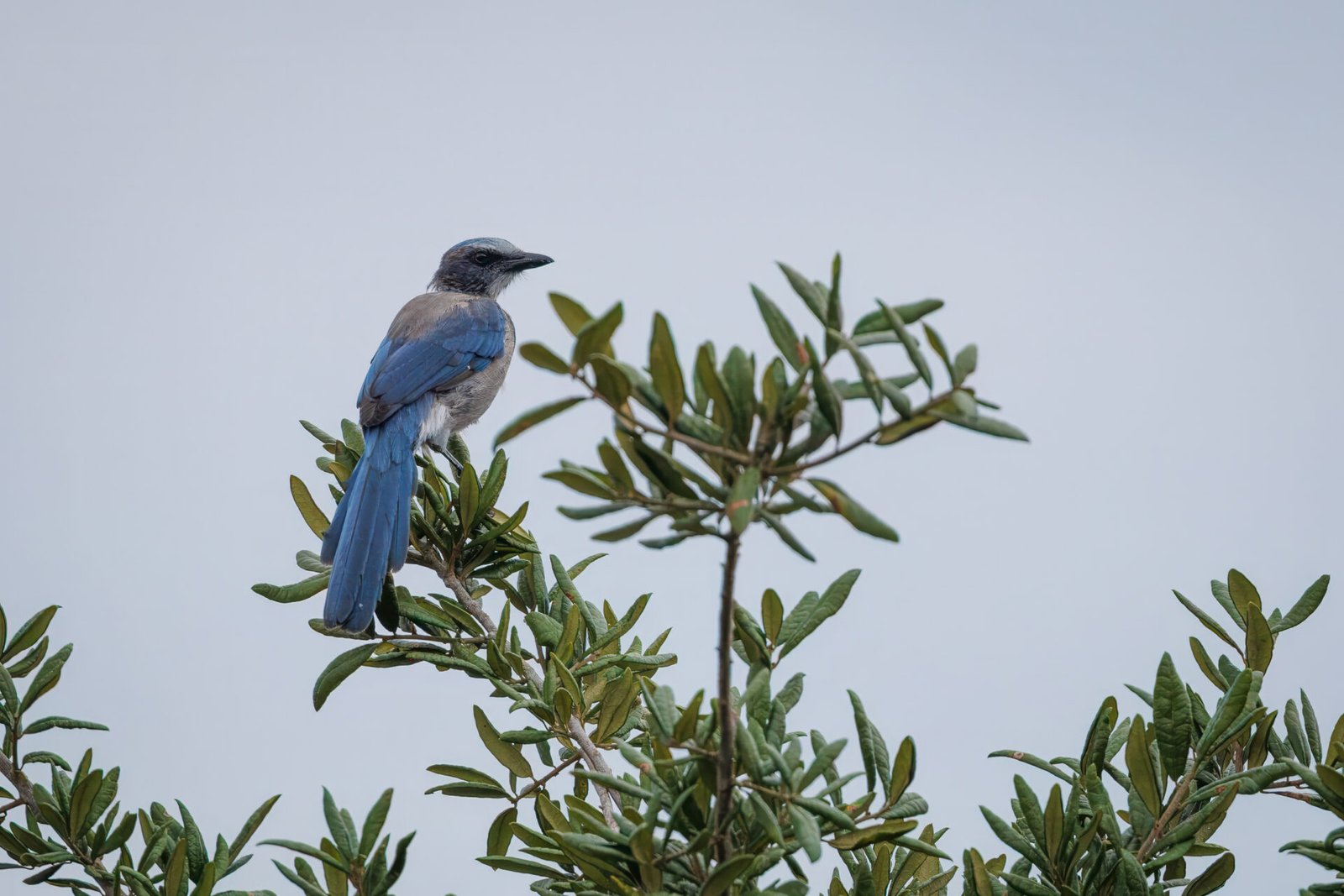
So we moved on a few miles west to the Coker Prairie Tract of the Edward W. Chance Reserve. We’ve found scrub jays at this location in the past. At 2,100 acres, the Coker Prairie Tract is much larger. But our focus was the areas of scrub habitat. After walking about 1.5 miles, we heard the recognizable squawks and ultimately found 3 jays. They stayed around us for several minutes before moving on. But it was long enough for everyone to get some photos and the couple joining us were finally able to see scrub jays. Success!
Walking the trails this time of year means paying attention to the surroundings. During the extreme heat and humidity this time of year, many trails don’t get much use. Especially those out in the open prairies. So that means that nature can take over. This is also the time of the year for insects. In some cases, BIG insects. Writing spiders take advantage of the lack of foot traffic to spin their webs across the open trails. That means watching out for and avoiding the silk strands that may trigger a spider to race out to see what they’ve caught. Experts claim that their bites are non-toxic and are only as painful as a bee sting. At 2 to 3 inches in size, my advice is …. just pay attention and avoid them!
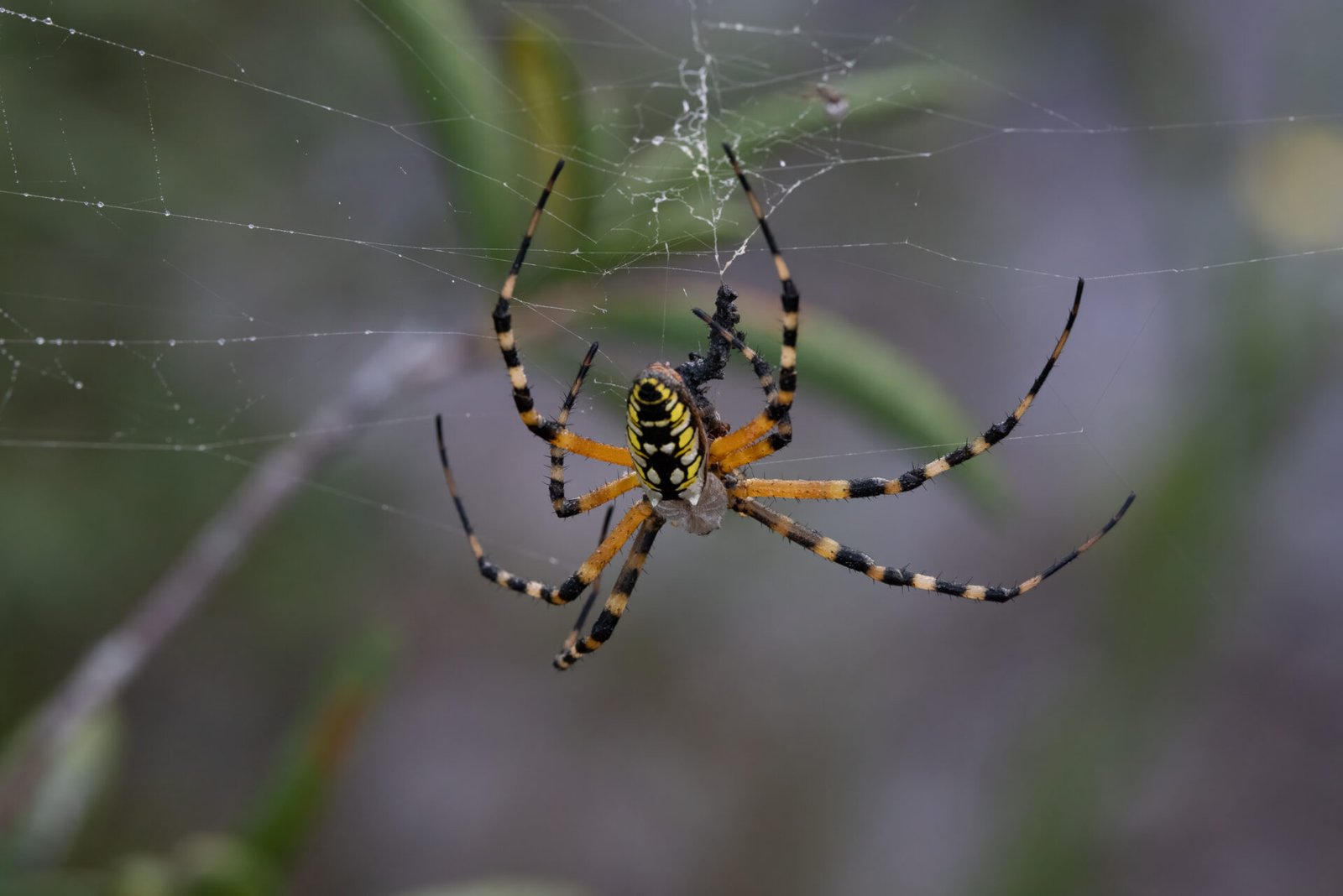
More photos have been uploaded to the Jays, Songbirds, and Insects galleries.
Leave a Reply